V1.3
Meditation (unedited)
There are many misconceptions about meditation. It is a physiological function, not a mystical or religious function. Anyone can benefit from the practice. Meditation is not mindfulness, it is the exact opposite. Meditation is the rest state for the brain, no thoughts, no awareness of the senses or even the body's location and position in time or space.
Sleep is indeed good for resting the brain but many studies have shown that it is very busy when sleeping. The brain deals with short term to long term memory translation. It performs housekeeping functions to remove toxins and of course the dream states. The brain also keeps watch to a certain extent while asleep. This makes sense from an evolutionary sense because we are so vulnerable when sleeping, some level of awareness must be maintained. The period of time spent in stasis is typically very short.
Meditation takes time to learn, it requires the overcoming of the primordial instincts of self-preservation. The conditions and process of learning how to effectively meditate will be discussed here.
Tasks are assigned
A grocery list is a simple but illustrative example. On Monday you may notice that you are short on paper towels and on Wednesday you are out of eggs. These observations are assigned as reminder tasks to your subconscious. The priority levels of these tasks are often not well made.
We do not need to understand how this reminder process works, only what the results are.
Prompts are issued
When the time comes to make your grocery list, a prompt will occur in your consciousness to put paper towels on the list and then eggs on the list. When the list is complete these subconscious tasks are terminated.
Another simple example
Multiple 8 times 8 (the task) and the answer (the prompt) will come nearly instantly. This was done in your subconscious without a calculator appearing in your consciousness. The task is quickly discharged.
Our lives can be complicated
We assign these tasks all through our waking hours, uncounted numbers of them, some simple, some very complicated. The resulting prompts pop into our consciousness disturbingly often.
We all have our limits
We do our best to discharge the tasks when prompted but there is a limit. We may feel guilt for not calling Aunt Ruth, or stress for being late in submitting a school paper. The prompts recur over and over until satisfied.
Anxiety, depression, confusion, indecision, shortened attention span, and a lack of clarity is the result of this overload. It is a syndrome as well.
Sleep vs meditation
Sleep is indeed a superpower both physically and physiologically, but it is also a very busy time for our brains. Scientists know of many of these housekeeping functions when we are asleep. When asleep, most of our higher level intellectual functions are disabled or downgraded.
Meditation, by contrast, is rest for your consciousness, it is absolute calm, it is your center, it is who you are without the constant barrage of daily life. Meditation however, is a waking function, your intellect is up and running and your subconscious remains at your disposal.
How meditation helps
When in a deep meditative state, no new tasks are assigned to our subconscious, and no new prompts are promoted to our consciousness. This is the time when priorities are set in our subconscious. This is the time when the subconscious can organize.
The science
In sleep studies clinicians monitor the electrical signals from the brain. There are several distinct states that indicate the states of sleep.
Beta (when awake and active),
Alpha (drowsy),
Theta (light sleep),
Beta (when dreaming),
Delta (deep, slow-wave sleep),
Gamma
In meditation this additional brain wave state is associated with high-level processing and insight, creating a state of peaceful, integrated focus. This state is passed through very quickly when falling asleep.
If we could listen to these signals as sounds (they are subsonic for the most part) the Beta waves would sound like harsh random noise. Alpha, Theta and Delta waves would sound like low wavering bass tones. Gamma would sound rhythmic, like slow breathing.
How to get there
For those of us with less complicated, stress free lives, meditation can be learned quickly. For the rest of us it is much more of a task, and unfortunately these are the very people who need it the most. It requires practice and patience initially.
The learning environment
Once learned, a good meditative state can be reached in almost any environment. When learning however certain conditions are strongly advised:
Sound - Absolute quiet is not needed but any percussive noise will interrupt the process. Turn off your phone and computer notifications. Turn the TV and radio off.
Temperature - of course you don't want to be too hot or cold (particularly your feet)
Physical Comfort - Yoga poses are fine for the mind/body experience but we desire teaching only the mind for this purpose.
On your back with your shoulders and head comfortably elevated is best. Some people also like for the knees to be comfortably elevated.
When fully relaxed your feet will tend to uncomfortably splay outwards. Use small pillows or blankets to prevent this.
Posture - The body has a natural symmetry. Try to keep your back, shoulders, neck and head in a straight line. Everyone has a different spine profile so experimentation is required to maximize comfort.
Light - Darkness is best. A black sock filled with rice works well. There are products as well, but many of them have uncomfortable headbands.
Timing - When learning to meditate it is best to practice mid-day when the mind is fresh. A practice session with preparation time need not be more than 15 minutes.
Preventing falling asleep too quickly - This is a major problem early in the learning process. A technique that works well is to balance an arm vertically. Focus on balancing with all muscles relaxed, including your hands. When you start to fall asleep your arm will drop waking you up.
This is a good first step because it takes some considerable degree of focus to maintain your arm in balance.
Circular breathing
Circular breathing - Breathing establishes a rhythm that mind and body responds to. When stressed we tend to breath shallowly to the point of gasping. When relaxed we breath more slowly and deeply.
This graphic explains the optimal breathing pattern for meditation.
link to sine_wave_from_circle.jpg
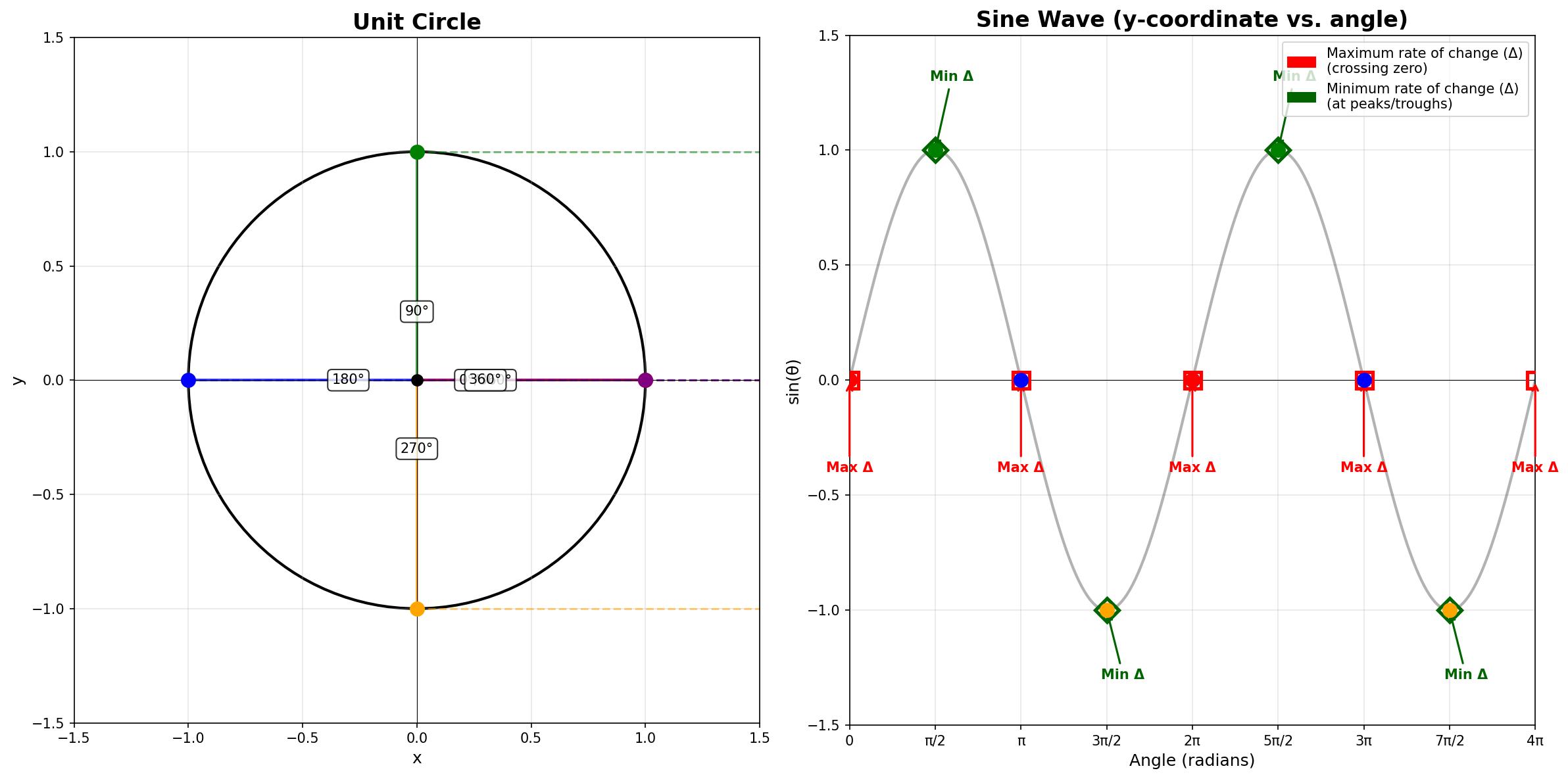 Note that at the top and bottom we are more or less holding our breath. In the middle is the period of maximum inhalation or exhalation. This is also a focusing technique (discussed on down).
How to stop the prompts
1) The arm balance method as discussed above. This is a good method to start with.
2) Thinking of something that is engaging enough to promote focus, but something that is not exciting.
An arts person may focus on the myriad of ways that a pattern can be placed onto a medium.
A math person may focus on a series of prime numbers.
A mechanically inclined person may focus on the many ways that a device may be assembled.
3) A technique that works for some is to think of a word and then think of a word for each letter in that word.
For example think of the word "session" and then a word that begins with "S" such as "smite". Then think of a word that begins with "E" and so on.
This task and the prompts that it generates are simple, non-stressful and flexible, which encourages focus away from the disturbing prompts from your subconscious.
4) Relaxing body parts - Start by focusing on relaxing your toes and progress upwards. When focus is lost start again at your toes.
5) Meditation recordings - Recordings that produce sounds that synchronize with breathing or heartbeat rates are helpful to some. The caveat here is that earphones can be uncomfortable.
6) Devices - There are a plethora of devices marketed to promote meditation. Most are worthless.
After time and practice a good meditative state can be very quickly reached and the above focus methods will fall into disuse.
But meditation is only rest which is calming and comforting. The journey to inner peace requires the wisdom to detect when we are overwhelmed and to set effective priorities. This must be done when awake. It is all to easy in our modern world to "put too much on our plate". It is your brain to manage, it is your life to live.
Good luck to you.
MTB